


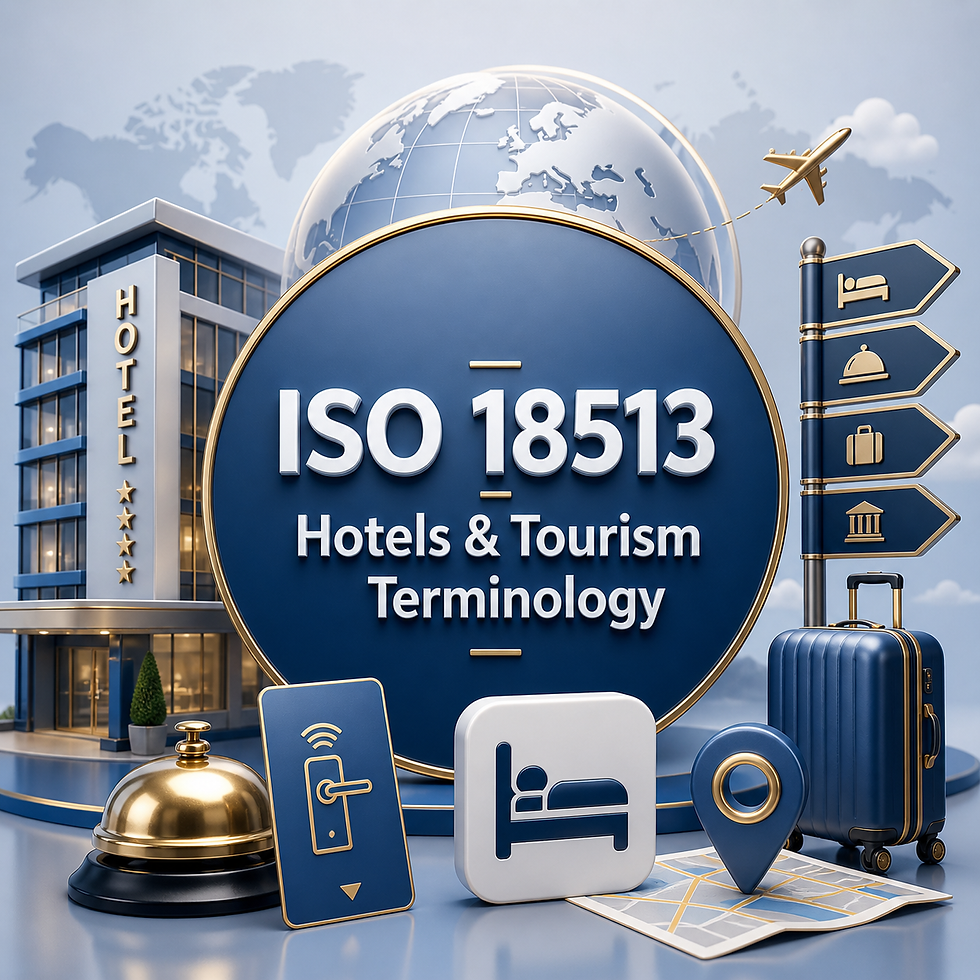
ISO 18513 – Hotels & Tourism Terminology: A Clear Language for Better Guest Experience
Tourism is built on trust, comfort, service, and clear communication. When guests book a hotel room, choose a holiday apartment, reserve a guesthouse, or compare tourism accommodation services, they need to understand what is being offered. At the same time, hotels and tourism service providers need clear words to describe their facilities, services, and guest experiences. This is where ISO 18513 – Hotels & Tourism Terminology becomes very useful.
ISO 18513 is a terminology standard for hotels and other types of tourism accommodation. Its purpose is simple but important: it helps create a common language for the tourism sector. In an industry where guests, travel agents, booking platforms, inspectors, operators, and service teams may come from different countries and cultures, clear terminology can reduce confusion and improve service quality.
One of the main strengths of ISO 18513 is that it supports better understanding between service providers and guests. Tourism words may look simple, but they can have different meanings in different places. For example, terms related to accommodation types, rooms, meal plans, facilities, guest services, reservations, and classifications may not always be understood in the same way. A clear vocabulary helps everyone speak with more accuracy.
For hotels and tourism accommodation providers, standard terminology can improve daily operations. When staff members use the same words in reception, housekeeping, reservations, marketing, and guest relations, communication becomes smoother. This can help reduce mistakes, improve training, and make internal processes more professional. Clear terminology is also useful for written materials such as brochures, websites, booking descriptions, guest information sheets, and service policies.
For guests, the benefit is even more direct. When tourism services are described clearly, guests can make better choices. They can understand what is included, what type of accommodation they are booking, and what kind of service they may expect. This can increase satisfaction because expectations are clearer from the beginning. A guest who understands the service before arrival is more likely to feel confident and comfortable during the stay.
ISO 18513 also supports fairness and transparency in the tourism market. When terms are used consistently, it becomes easier to compare different types of accommodation and services. This does not mean that every hotel or tourism property must look the same. On the contrary, each property can keep its own identity, design, culture, and style. The standard simply supports clearer descriptions, so that quality and service can be understood more easily.
Another positive point is the value of ISO 18513 for international tourism. Travel is global, and many guests book accommodation in countries where they may not know the local language or service customs. A shared terminology framework helps bridge this gap. It supports better communication between cultures and helps tourism providers present their services in a way that is more understandable to international visitors.
The standard can also be useful for quality assessment and inspection work. Clear terms make it easier to review services, prepare reports, compare service descriptions, and understand whether the information given to guests is accurate. In quality-related activities, terminology is not just about words. It is about clarity, consistency, and trust. A well-defined vocabulary helps create a more professional and transparent service environment.
For training and education in hospitality, ISO 18513 can also be a practical reference. Students, trainees, and new employees in hotels and tourism services can benefit from learning the correct terms used in the sector. This helps them build professional confidence and communicate more effectively with guests and colleagues. It also supports a culture of quality from the beginning of a person’s career in hospitality.
In modern tourism, digital communication makes terminology even more important. Many guests first meet a hotel or accommodation provider through a website, online travel platform, social media page, or digital brochure. If the words used online are unclear, guests may misunderstand the offer. Clear terminology helps digital information become more reliable, professional, and guest-friendly.
ISO 18513 is also helpful because tourism is a diverse sector. It includes hotels, resorts, guesthouses, serviced apartments, holiday villages, hostels, and many other accommodation styles. Each type of accommodation may have different features, but clear vocabulary helps organize these differences in a way that is easier to understand. This supports both customer choice and professional communication.
The positive impact of this standard is not limited to large hotels. Small and medium tourism businesses can also benefit. A small guesthouse, family-run accommodation, or local tourism property can use clear terminology to present its services with more confidence. This can strengthen guest trust and support a more professional image in the market.
In conclusion, ISO 18513 – Hotels & Tourism Terminology plays an important role in improving communication across the hospitality and tourism sector. It supports clearer service descriptions, better guest understanding, smoother operations, stronger training, and more transparent quality assessment. In a global tourism environment, clear words are part of good service. When guests and providers understand each other better, the whole tourism experience becomes more positive, reliable, and enjoyable.
Sources
ISO 18513:2021 is the current published edition and defines terms used in tourism accommodation and related services.
A public preview of the standard explains that its purpose is to support understanding between users and providers of tourism services and help consumers make informed choices.


Comments