


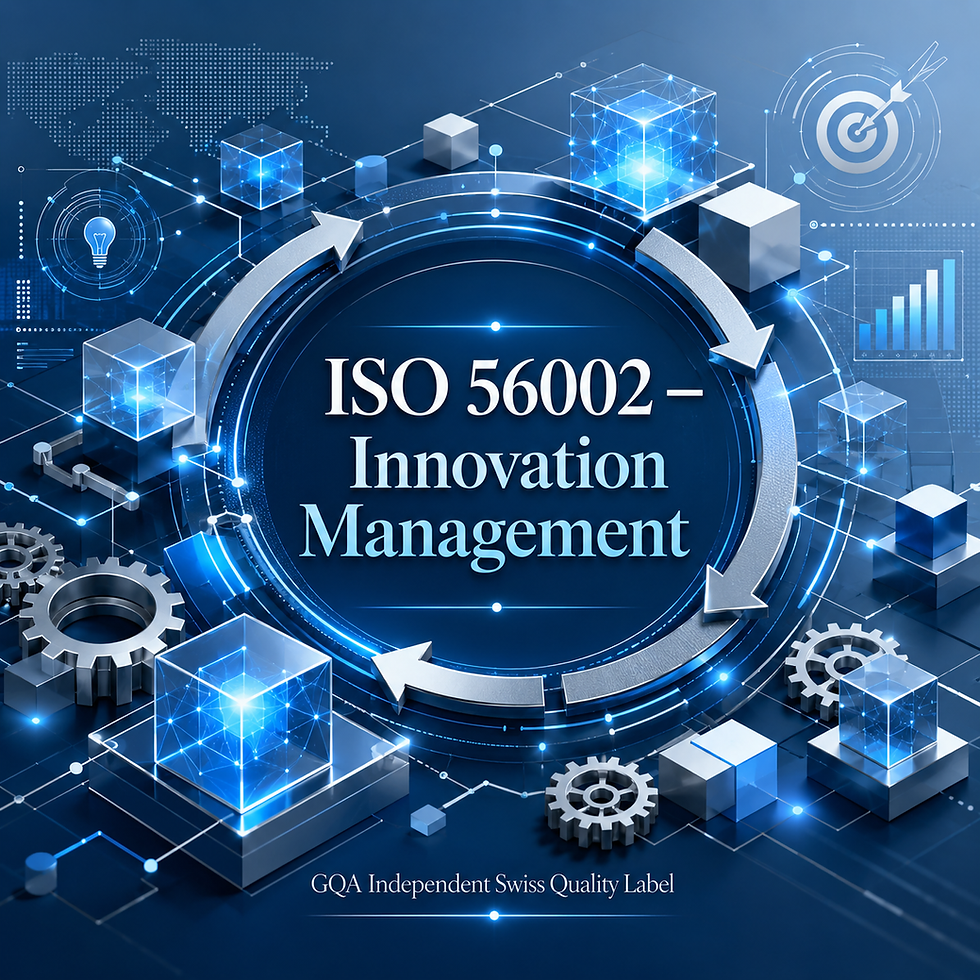
ISO 56002 – Innovation Management
Innovation is no longer only about creating a new product or a new idea. Today, innovation is a structured way of thinking, planning, improving, and creating value. This is why ISO 56002 is important. It gives guidance for building an #Innovation_Management system that helps institutions, companies, and professional bodies manage ideas in a clear and organized way.
ISO 56002 is not a rulebook that forces one fixed method. Instead, it is a helpful guide for creating a culture where #Innovation can grow. It supports leaders, teams, and stakeholders in turning ideas into practical results. It also helps organizations understand that innovation is not only a creative activity, but also a management process that needs direction, resources, review, and continuous improvement.
A strong #Innovation_Management_System starts with leadership. When leaders support innovation, people feel more confident to share ideas, test new solutions, and learn from experience. Good leadership creates trust. It also gives innovation a clear purpose. Without direction, ideas may remain only ideas. With a clear system, ideas can become projects, services, processes, or improvements that bring real value.
One of the main strengths of ISO 56002 is that it connects innovation with #Strategic_Planning. Innovation should not be separate from the mission or goals of an organization. It should support long-term development, quality, competitiveness, and positive change. When innovation is aligned with strategy, resources are used better, decisions become clearer, and results become easier to measure.
The standard also highlights the importance of #Innovation_Culture. A positive culture encourages curiosity, collaboration, and responsible risk-taking. People should feel that their ideas are welcome. They should also understand that not every idea will succeed, and this is normal. Innovation often includes testing, learning, adjusting, and improving. A healthy culture sees learning as part of progress.
Another important part of ISO 56002 is the focus on #Collaboration. Many good ideas come from working with others. Teams, customers, partners, experts, and stakeholders can all help improve innovation results. Collaboration brings different views together. It helps organizations understand needs, identify opportunities, and create better solutions.
ISO 56002 also supports a better understanding of #Risk_Management. Innovation always includes uncertainty. New ideas may require time, money, testing, and change. A good innovation system does not remove all risk, but it helps manage risk wisely. It allows organizations to make informed decisions, protect resources, and move forward with more confidence.
The standard encourages organizations to identify #Opportunities. This can include new market needs, new technologies, new service models, better internal processes, or improved customer experiences. By using a structured system, organizations can collect ideas, evaluate them, select the best options, and develop them step by step.
Another positive element is #Continuous_Improvement. Innovation management is not a one-time project. It should be reviewed and improved regularly. Organizations can monitor performance, learn from results, and improve their innovation methods. This makes the system more mature over time and helps keep innovation active and useful.
ISO 56002 is also useful because it supports clear #Communication. When people understand what innovation means, how ideas are handled, and how decisions are made, they can participate more effectively. Clear communication reduces confusion and builds confidence among internal and external stakeholders.
The guidance can be applied to many types of innovation. This may include #Product_Innovation, service innovation, process improvement, business model development, digital transformation, and new ways of working. This flexibility makes ISO 56002 useful for many sectors and sizes of organizations.
For quality-focused institutions, ISO 56002 is valuable because it connects innovation with #Quality_Assurance. Innovation should not be random or uncontrolled. It should be managed in a way that supports reliability, trust, and long-term value. A good innovation system helps organizations improve while keeping quality at the center.
In practical terms, ISO 56002 can help organizations answer important questions: How do we collect ideas? How do we choose the best ideas? Who is responsible for innovation? What resources are needed? How do we measure progress? How do we learn from success and failure? These questions help turn innovation from a general ambition into a real management practice.
The standard also supports #Sustainable_Growth. Innovation is not only about fast change. It is also about responsible development, better services, stronger systems, and long-term success. When innovation is managed well, it can help organizations adapt to change, serve people better, and remain relevant in a changing world.
ISO 56002 gives a positive and practical message: innovation can be learned, managed, supported, and improved. Creativity is important, but structure makes creativity more effective. Ideas need a system to grow. With leadership, culture, strategy, collaboration, and review, innovation becomes a reliable path toward progress.
In conclusion, ISO 56002 is a useful guide for any organization that wants to strengthen its ability to innovate. It supports a balanced approach that combines creativity with management, freedom with structure, and ambition with responsibility. By following its guidance, organizations can build stronger innovation practices, improve performance, and create lasting value for stakeholders and society.
Sources
Information based on public guidance describing ISO 56002 as a framework for establishing, implementing, maintaining, and continually improving an innovation management system, applicable across different types and sizes of organizations.


Comments