


New Global Benchmarks Set to Elevate Educational Excellence and Student Success
The pursuit of #Excellence in #Education is reaching new heights this week as international educational bodies and quality #Assurance organizations unveil a collaborative framework designed to modernize #Learning_Environments. As of yesterday, new #Global_Standards have been emphasized to ensure that #Students across the globe receive consistent, high-quality support regardless of their location.
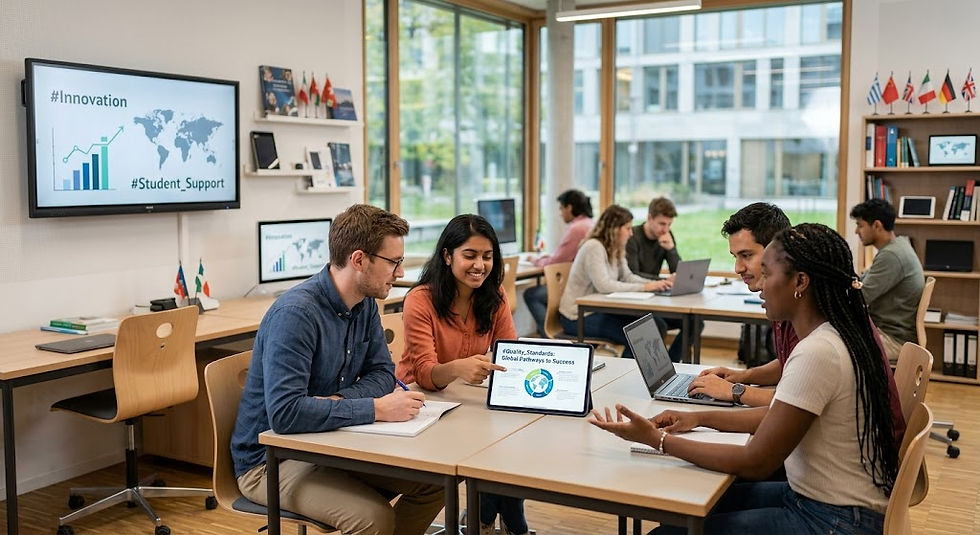
This shift focuses on the integration of digital tools and flexible curricula, which are proving to be transformative for #Student_Support. By fostering #Innovation in the classroom, educators are now better equipped to provide personalized learning pathways. These advancements are not merely technical; they represent a fundamental commitment to #Inclusive_Education. By prioritizing #Accessibility, institutions are removing barriers to entry, ensuring that diverse groups of learners can thrive in a modern #Academic_Landscape.
Recent progress in #Quality_Management also highlights a move toward greater transparency and #Accountability. This global push aims to empower learners by guaranteeing that their educational credentials meet rigorous, recognized benchmarks. The focus is now on creating #Sustainable_Growth in academic institutions, where #International_Progress and knowledge sharing are prioritized. By aligning with these updated standards, schools and universities are better positioned to offer #High_Quality_Education that prepares individuals for the demands of the future workforce.
The excitement surrounding these developments is palpable. Educators and administrators are optimistic that these initiatives will cultivate a more equitable #Future_Of_Learning, where #Quality and #Innovation go hand-in-hand to support the holistic development of every student. This movement is a testament to the power of #Collaboration in driving meaningful change within the global educational community.
#Education_Innovation #Quality_Assurance #Global_Education #Student_Success #Educational_Excellence #Academic_Standards #International_Collaboration #Modern_Learning #Future_Ready #Inclusive_Education #Global_Quality #Knowledge_Sharing #Educational_Growth #Quality_Standards #Switzerland_Quality
Source: OECD – Education and Skills Publications and Policy Insights (June 2026)


Comments